John Bates
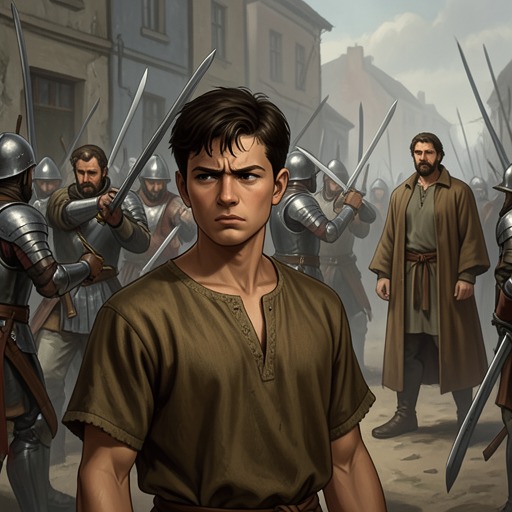
Henry VJohn Bates is one of the English soldiers who speaks with Henry V on the eve of the Battle of Agincourt. His brief appearance gives the campaign a ground-level moral dimension: a soldier can question the justice of the cause and the king’s responsibility for its dead, yet still resolve to fight.
Identity and Introduction
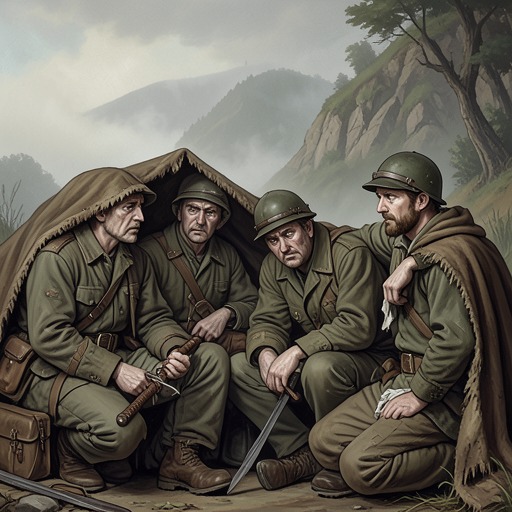
Bates enters with Alexander Court and Michael Williams, among the soldiers present as the English army faces battle. The conversation places him not among the commanders who argued for the claim to France, but among the men who must bear the physical consequences of that claim. In the wider scene, the army is sick and reduced in number, making the soldiers’ uncertainty about what lies ahead more than an abstract debate.
The Nighttime Debate
Bates asks whether the thought being discussed has been told to the king. His question helps establish the tension between a ruler’s public authority and the private judgments of the men who serve him. In speaking with Henry V, he considers the king not only as a commander but as a man whose wishes and burdens can be assessed by ordinary soldiers.
The exchange turns on the justice of the war. Williams argues that if the cause is not good, the king will have a heavy reckoning when the dead confront him with the bodily cost of battle. Bates answers that each man who dies bears responsibility for his own fate and that the king is not answerable for him. His response does not settle whether the campaign is just; it shifts the question toward the soldier’s own moral account.
Responsibility and Choice
Bates’s conclusion is deliberately double-edged. He does not want the king to answer for him, but he nevertheless determines to fight vigorously for him. The decision distinguishes service from unquestioning approval: Bates can retain his doubts about the cause and still choose his place in the army. His words make personal responsibility a counterweight to the king’s burden, without erasing the dispute over what the war demands of either man.
Narrative Role
Bates gives the pre-battle discussion a perspective distinct from royal speeches and military planning. The campaign’s depleted condition and the approaching battle sharpen the stakes, while his disagreement with Williams prevents the soldiers from forming a single, simple judgment of Henry V. Bates neither declares the king innocent nor refuses him service. His ending leaves the moral question open and makes his resolve to fight part of that uncertainty.